Lost Venues
This page is dedicated to Birmingham’s lost venues – the pubs, clubs and music spaces that are no longer open but still live on in people’s memories. Here we remember the places that helped shape the city’s music scene, even though the doors have closed and the buildings have changed or disappeared.
The Mercat
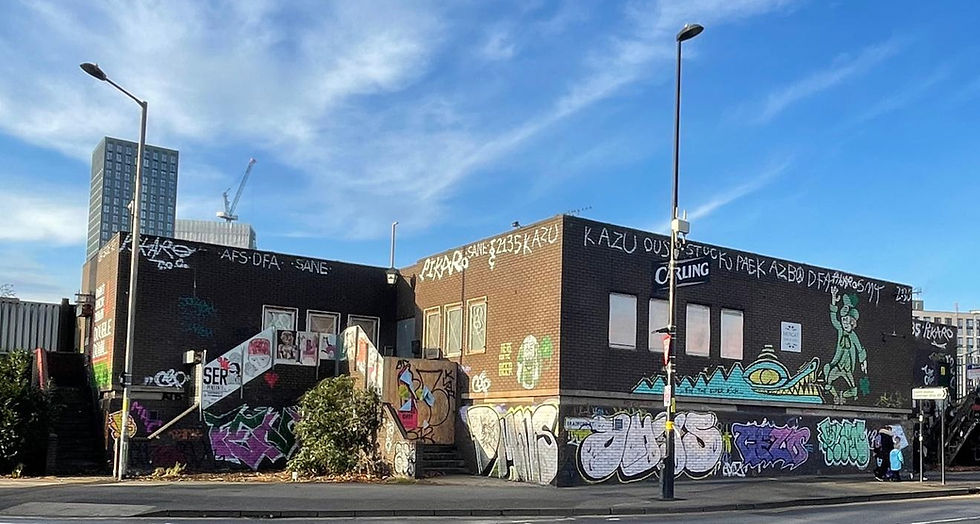
The Mercat, originally called Mercat Cross, was on Bradford Street in Digbeth, close to the Birmingham wholesale markets. It was a fairly typical 1960s-style building, and became a popular pub with market workers as well as people coming into Digbeth at night.
The Mercat was part of the Digbeth pub and music scene, particularly during the 1970s and 1980s, when places like The Barrel Organ and The Old Railway were also known for live music. It hosted local and regional rock bands, and also had DJs playing goth, rock and alternative music into the night.
Among the bands known to have played at the Mercat were James Rays Gangwar and Revolution by Night. The pub continued to host music artists for many years before eventually closing.
It may not have had the same famous history as places such as The Crown, Mothers or the Ritz Ballroom, but the Mercat was part of the network of smaller Birmingham pubs and venues that kept the local rock and alternative music scene going.
Costermongers

Tucked completely below ground on Dalton Way off Birmingham’s Priory Square, The Costermongers (fondly known as "Costers") was a legendary subterranean sanctuary for the city's alternative subcultures. Named after the historic term for street fruit sellers, the Ansells Brewery pub was officially transformed into a dedicated rock and heavy metal cavern in 1985, quickly becoming famous for its dark red-and-black decor, painted skeleton bones, and notoriously sticky floors. Far more than just a bar, Costers served as a vital social hub and incubator for the local music scene; it hosted rowdy, grassroots live gigs and was a regular drinking hotspot for legendary local bands like grindcore pioneers Napalm Death and alternative icons Pop Will Eat Itself. Though the original underground venue closed its doors in August 2009 due to city redevelopment, and opened briefly before succumbing to the Covid 19 pandemic, it remains an iconic symbol of the golden age of Birmingham’s rock and punk heritage.
Rum Runner

Located at 273 Broad Street near the Gas Street Basin, The Rum Runner was an absolute powerhouse of Birmingham’s nightlife and a primary catalyst for the UK's New Romantic movement. Originally opened in 1964 as a conventional casino and cabaret venue by the Berrow family, the club evolved into a legendary late-night hangout for rock icons like Black Sabbath (Ozzy met his first wife Thelma Riley at the venue) and featured melodic rock band Magnum as its early house band. Following a late-1970s remodel inspired by New York’s Studio 54, brothers Paul and Michael Berrow pivoted the venue toward cutting-edge fashion and synth-pop, famously offering free rehearsal space and live gig slots to rising local forces like UB40 and Dexys Midnight Runners. Most iconically, it served as the birthplace of Duran Duran, who became the new resident band, worked staff jobs from the door to the DJ booth, and were managed directly by the Berrows from their upstairs office. Though the historic venue was demolished in 1987 to make way for the Hyatt Hotel and Regency Wharf development, its monumental cultural legacy is permanently honored today by an official Birmingham Civic Society blue plaque.
Adam & Eve

Situated at 201 Bradford Street, The Adam & Eve was one of Digbeth's most vibrant, long-standing, and fiercely characterful public houses. Originally built in the 18th century, the pub underwent major Victorian remodelling in 1889 and survived severe damage during the WWII Birmingham Blitz before becoming a celebrated cornerstone of the city’s Irish hospitality scene during the mid-20th century. In its musical prime, the pub was a beloved destination for night owls and gig-goers, boasting a long, narrow main room and a large dance floor that regularly hosted grassroots punk, rock, and indie talent—including notable local icons like Steve Gibbons and The Twang. Following a decline and its ultimate closure in late 2014, the historic building was remarkably repurposed by social enterprise groups into "Evolve," a café and housing hub dedicated to supporting and training vulnerable young people and recovering addicts.
Edwards No. 8

Situated on John Bright Street, Edwards No. 8 (affectionately crowned "Eddies") was the undisputed, multi-floor epicenter of Birmingham’s rock, metal, and goth nightlife for over three decades. Originally opened in the 1970s by local nightclub mogul Eddie Fewtrell, the venue pivotally turned to "the dark side" in 1987 to become a dedicated alternative haven. It quickly gained nationwide fame for its sweat-dripping ceilings, sprawling multi-room layout, and an intimate, tiny upstairs stage that hosted future stadium giants right on the cusp of stardom. The venue famously served as a crucial launchpad for the era's definitive musical movements; it hosted a historic, instrument-smashing performance by a Bleach-era Nirvana in 1989, a sweat-drenched gig by Pearl Jam mere months before they became global superstars, and early, high-octane shows from iconic heavyweights like Rage Against the Machine, Soundgarden, R.E.M., and Radiohead. Tragically, the original rock sanctuary was gutted by a devastating fire in November 2006. Though the physical building was later repurposed into office space and a restaurant, the spirit of Eddies lives on as a foundational pillar of Birmingham's alternative music heritage
The Crown

Standing proudly at the corner of Station Street and Hill Street, The Crown (originally built in 1881 as the General Elliott) is celebrated globally as the true cradle and "birthplace of heavy metal." The historic pub earned its immortal place in music history when a local band called Earth—who would subsequently rename themselves Black Sabbath—played their very first live gig upstairs in 1968. This upper floor housed Henry’s Blueshouse, an influential club night run by the band’s first manager, Jim Simpson, which quickly became the epicentre of the UK's progressive music boom. Beyond launching Ozzy Osbourne and company, the tiny stage hosted an astonishing roll call of rock royalty, including fellow metal pioneers Judas Priest, alongside iconic acts like The Move, Thin Lizzy, Status Quo, Jethro Tull, Supertramp, and Budgie. Though the pub has sat empty since closing its doors in 2014, its monumental rock heritage was officially protected in 2024 when the building was awarded Grade II listed status following a passionate campaign by music fans. .
The Barrel Organ
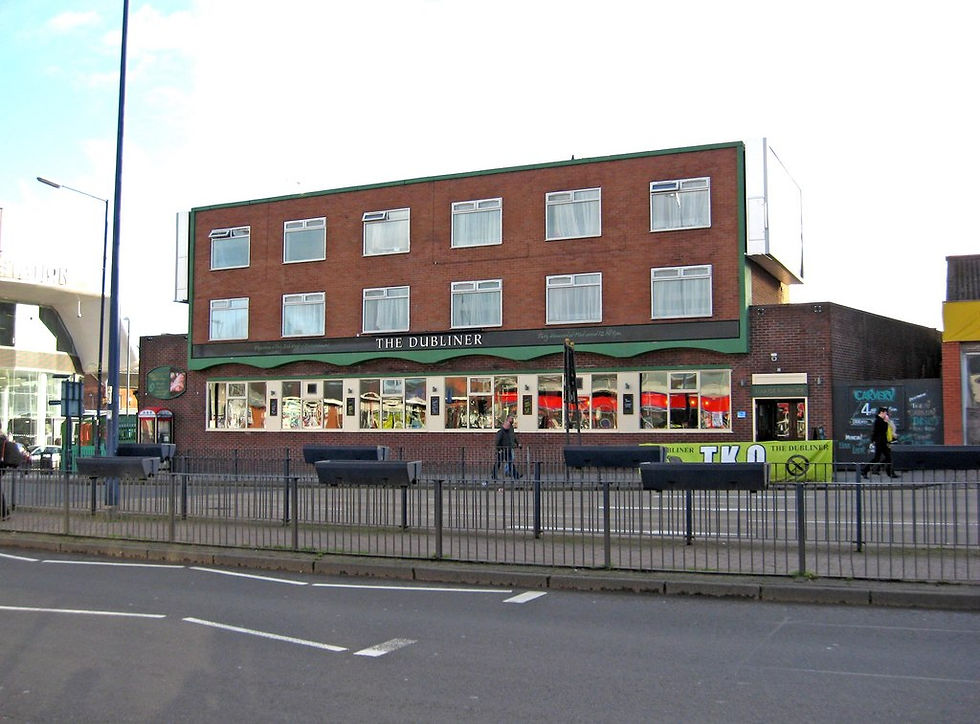
© Copyright P L Chadwick and licensed for reuse under this Creative Commons Licence
Located on Digbeth High Street, The Barrel Organ was a cornerstone of Birmingham's grass-roots music circuit and a legendary subcultural hub from its opening in 1973 until its closure in 1993. The L-shaped Ansells pub featured a dedicated stage at one end, drawing a vibrant, eclectic mix of punks, goths, psychobillies, and alternative indie kids. It was highly regarded for launching local talent, famously captured on the 1980 compilation album Live At The Barrel Organ by Brum Beat magazine and Big Bear Records. The venue's stage hosted an impressive roster of rising acts, ranging from local favorites like The Quads and The Lazers (featuring a young Carol Decker before fronting T'Pau), to notable early performances from the Manic Street Preachers and The Slits. Following its time as an alternative landmark, the building famously became the home of The Dubliner during the 1990s Irish Quarter boom, and the location later evolved to house the Subside rock bar.
The photo below is the venue in its life as 'The Dubliner'
Mothers

Operating above a furniture store on Erdington High Street between 1968 and 1971, Mothers (formerly the Carlton Ballroom) was an unassuming space that spectacularly became what Billboard magazine voted the "number one rock venue in the world." The legendary club was championed by iconic resident DJ John Peel, who famously remarked that people were always amazed to discover the best club in Britain was tucked away in Erdington. Despite its modest 400-capacity size, Mothers held an almost mythical status on the global touring circuit, acting as the launchpad for Traffic's live debut and serving as the setting where Pink Floyd recorded the historic live half of their 1969 album Ummagumma. Over its short three-year lifespan, its tiny stage hosted an astonishing roll call of future rock royalty, including early, explosive gigs by Black Sabbath, Deep Purple, Jethro Tull, Genesis, Yes, Elton John, and Derek and the Dominos, alongside unforgettable blues-rock performances from The Faces, Fleetwood Mac, and Chicken Shack. Though it closed in January 1971, the phenomenal venue's legacy is officially preserved today by a Birmingham Civic Society blue plaque on the High Street.
Bingley Hall

Standing prominently on Broad Street from 1850 until its tragic destruction by fire in 1984, Bingley Hall holds an immortal legacy as the UK’s first purpose-built exhibition centre and one of Birmingham’s grandest lost entertainment arenas. Originally designed by J.A. Chatwin to host industrial expositions, cattle shows, and political rallies, the vast, cavernous hall dynamically pivoted into a massive, high-capacity concert hotspot during the 1970s and 1980s.
It became a legendary, must-visit destination for rock, punk, and new wave tours, famously serving as a massive stronghold for The Jam, who drew thousands of roaring mods to the venue across several iconic tours, including their highly celebrated Transglobal Unity Express and Beat Surrender eras in 1982.
Beyond Paul Weller’s trio, the hall’s booming acoustics hosted an extraordinary lineup of world-class artists, including Bob Marley & The Wailers, Roxy Music, Iron Maiden, and Marvin Gaye. Following the devastating 1984 blaze, the site was completely cleared and reborn, now proudly serving as the home of the International Convention Centre and the world-renowned Symphony Hall, ensuring that the ground on Broad Street remains a beating heart for live music
Royalty Free Image
The Mermaid

The Mermaid, on Stratford Road at the junction with Warwick Road in Sparkhill, Birmingham, was a traditional local pub that became one of the most important underground music venues in Birmingham during the 1980s. Its distinctive Art Deco frontage, including the famous mermaid sculpture by Birmingham artist William Bloye, gave the pub a character that matched the unconventional music taking place upstairs. For a generation of young punks, metal fans and outsiders, The Mermaid became a cheap, welcoming and fiercely independent place to see live music, with gigs often costing little more than £1.
The Mermaid’s greatest musical legacy is its role in the development of grindcore. West Midlands band Napalm Death were closely associated with the venue, playing there regularly and using the intense, chaotic environment to develop their incredibly fast and abrasive sound. The pub also hosted influential acts including UK Subs, Chumawamb, the Cardiacs, and Primal Scream. Gigs became notorious for their energy, with stage diving, packed crowds and even reports of plaster falling from the ceiling. Although The Mermaid eventually closed and the building later fell into disrepair, its influence lives on through Napalm Death and the worldwide grindcore scene. Today, it is remembered as one of the key birthplaces of extreme music and an important part of Birmingham's musical heritage.
The Billesley

The Billesley Pub on Brook Lane in King’s Heath, Birmingham, was a well-known local pub that became particularly important to the area’s rock and metal community through the Billesley Rock Club. The club operated upstairs at the pub, presenting live music every Friday and Saturday and building a reputation for bringing a mixture of tribute acts, original bands and touring rock performers to a grassroots venue.
For music fans, the Billesley was more than simply a pub with a gig room; it became a regular stop on the Midlands rock circuit and a place where established touring acts could appear alongside emerging local talent. In 2026 alone, the programme included names such as Midnite City, Fury and Quartz, Absolva and the Pat McManus band, as well as tribute acts celebrating bands including Whitesnake and Bon Jovi.
Sadly, The Billesley became one of the latest grassroots music venues to be lost when the pub ceased trading and closed on 13 July 2026. The closure came as a major blow to the local music community, with the Rock Club team describing themselves as devastated and heartbroken at the sudden loss of their venue.